B”SD
Shalom wonderful people,
I wanted to offer those of you who were not able to attend the event, a link to the video and also the transcribed version thanks to a new friend who came to the shiur – Shira Bienstock.
 |
To hear both talks, click here. |
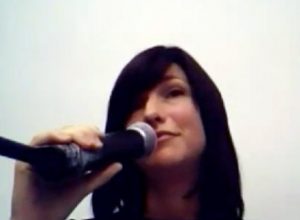 |
For just my talk, click here. |
or for men, the transcript is below.
As for how I am doing… depends on the hour, the day. Emunah is really not a gift – it is a continual exercise. I go to the ‘gym’ as much as I can.
Blessings from a snowy Jerusalem,
Batya
Batya Burd, Zos Chanukah 5774
“This is a little strange for me. I haven’t really gotten up to speak in this yeshiva ever. I also wasn’t a Rebbetzin before. I guess I got the Bircas HaTorah smichah. It’s funny because after I told my son about his father’s passing, during his crying he said, “Abba didn’t even get smicha!” Well, at least I had a little comic relief moment in this whole thing. I said, “Yaakov, you know smicha only matters in this world. It’s okay. Where he is it doesn’t matter anymore.” It’s actually a very big joke with us, because Gershon never planned to get smicha, but ever since ‘then’ everyone has been calling him Rabbi. So I tell my son, “It’s okay, Abba is a Rabbi now and got smicha.” And I’m a Rebbetzin. This is what it takes….
Hi, I am Batya Burd. Unfortunately you know much of my story. Two months ago, exactly today on the Hebrew calendar and on the English calendar, I went away for Shabbos with my husband to celebrate his fourtieth birthday. It was a very romantic getaway. Champagne on ice. We had cake and a note from the manager and an incredible sea-view. We were doing a little bit of a life review together– really for him—this is such big milestone in his life—40. Everybody waits for 40. He was smiling from ear to ear. I’ve never ever seen him so happy, and so fulfilled, and so proud of himself. I said to him, “You know, you’re forty. You just finished a life. Forty is a life. It’s a beginning and an end of something…and this is it! You just finished a life.” He just had this incredible smile and he said, “Yeah.” Then we decided to go to the beach, to this little spot we know to be alone. On the way there we were reflecting. Rebbetzin Heller’s husband had just died, and I said to him, “I just can’t believe it. I can’t believe in an instant, her life is completely different. In one second. She probably has to go alone now travelling to raise money…our sister was just there for Sukkos. I just can’t believe it. How one second your life is one way, and the next second you’re living a totally different life.” Half an hour later I knew what that felt like.
When an author writes a book, he uses foreshadowing. So, as much as I walk the pages of my life now, I see Hashem’s–the Author of my life– foreshadowing. Introducing me to the next pages as I go along…
As I was on that beach, a lot of things went through my mind. I felt how much my life was going to be shaken. I felt how much Bircas Hatorah and the Rosh Yeshiva, Rabbi Tagger’s life were going to be shaken. But it was a very personal, earth-shaking event. Until…I came to the levaya (funeral), and then continued life, and I saw that it was really Klal Yisrael’s tragedy, and something earthshaking for all of us, which was shocking to me. I had no idea how big this was going to be. And in fact, every day, I still try to understand what’s happening out there, outside of my family, outside of my personal world.
People have been really affected. People have been very shaken. For some reason, some of the basis of people’s Yiddishkeit is somehow not so firm now. Someone came up to me and said that she felt this was too big. She said, “We need chizuk, G-d, this is just too big for us.” And I couldn’t understand. I mean, this wasn’t someone that was in her family. So, what’s happening here?
I got to thinking about it a bit more and I started to have some ideas about what’s happening. There are many different things happening, but I saw one. That was…many people die, and I’m sure we know many people, if not personally then stories of people dying, and there’s usually something that they die from. They die from a disease, they die from a war, they die from something. I think there is a part of us that is only comfortable with having them die from that thing that took them. It’s the Arab suicide bomber. It’s their diet—they just had the wrong diet–if they just were a vegetarian, they wouldn’t have gotten this disease! They were on the wrong side of town- they were doing something dangerous. G-d, help us! Save us from the wars. Save us from the intifada. Save us from our sicknesses– help our doctors to have the right medicine– help us to make the right decisions.
It’s extremely uncomfortable, extremely uncomfortable, to look this in the face and say—this was a former lifeguard, who was completely healthy, completely awake, completely fine, swimming in waves that he could totally handle. And one little rock from a wave knocked him out.
Save us from You, G-d.
It’s pretty clear that Hashem took him. That makes people very uncomfortable. I’m uncomfortable saying that in front of you guys, actually. I love G-d. Don’t worry, I’m getting somewhere…
A friend of mine ran over to my house a few weeks ago. She ran in and said, “How are you doing? I just had a dream about you.” I said, “Really? What was the dream?” She said, “I had a dream you were wearing something very inappropriate for a religious person. Are you okay?” I said, “I’m not going ‘off the derech’ just yet. I’m not okay, but I’m still tznius, covering my hair, keeping kashrus. This is not affecting my Yiddishkeit, as far as I know. Not today.” In fact, it actually disturbed me that she was nervous for me and for my Yiddishkeit. It really disturbed me. I realized this was starting to become kind of a pattern…someone goes through a divorce, they go through a loss of a loved one…what are the chances of staying ‘on’? Of not falling a little bit? Of not saying, “This is what you gave me, G-d? Here I am doing everything for you. And look at the troubles I’m having in my life. Why should I do this? Why am I making so much effort? It’s so much easier to relax, be merry. What’s this all for anyway? You abandoned me. I’ll abandon You.” Chas v’Shalom. It’s very serious. It really is.
So, we all have this in us. It’s really just like this place of….wanting good, for good. So: go back to basics, to the first principles. Why am I doing this, and why should it not affect my Yiddishkeit? If I see that it brings me to tragedy and it definitely doesn’t protect me from suffering – severe suffering and severe trauma…and yet here I am. Keeping mitzvos. Why am I keeping mitzvos? Is it because Shabbos is nice? In order to have a nice community? To feel good through giving? It feels good to be good. ( But sometimes it doesn’t feel good to be good; sometimes it doesn’t help.)
This place…is sometimes fun and exciting. Sometimes it’s sad and surreal. Sometimes it’s warm and wonderful.
This place is a STAGE – in both senses of the word. It’s a stage in the sense of time – a time-period . And it’s a stage in terms of drama – a platform for a scene. I’m not just wearing a wig, I’m wearing a body. I’m wearing a body for a certain amount of time. Then I won’t be. Then I will be what I am.
What am I? I am a potentially eternal being, who has been brought here to learn from this place. I, like all of you, and everyone else, have something left to accomplish here. I, like all of you, am broken in some way, and not yet able to be part of that Infinite Light of G-d. And I need this place to enable me to return home in a state that I can fuse with the Light of G-d. I need these opportunities; sometimes I need the suffering. When I allow myself to learn what I’m here to learn, to experience–without pushing away–the pain that comes to me, I actually do it. There’s actually spiritual transformation that happens. I do not seek it. I am not a masochist. But if it sought me, then I’m clear that I’m doing it. And when I do it, I rise to the next level, then the next level, then the next level; sometimes it’s through good, and sometimes it’s not.
So will it affect my Yiddishkeit? Yes. It’s completely in-line with my Yiddishkeit. It’s completely in-line with my Yiddishkeit. Yiddishkeit is a spiritual reality that we are all souls here to be fixed, and whatever happens to us, we need to use it to come closer. In fact, it’s even more powerful when something this big happens to us, because we get siyata d’shmaya and the ability to make great leaps with one trial. Because here we can actually make “the big money,” as they say in yeshiva. There are certain times in your life when you make ‘a little money’ spiritually speaking–you do a little chessed—and there are certain times when G-d just puts on your plate the jackpot. It doesn’t look like a jackpot. You have to be wearing certain eyes. But when you see the true goal of what we’re doing here, you understand that this is where the ‘big money’ is, if you use it.
People ask why. Tonight Rabbi Katz said that people ask “why”–everybody wants to know why, because we’re insecure people and we need security. We need to know why, and of course nobody can answer the question why.
It’s funny. I’ve always had such respect for ants. I really have. They are always busy, busy at work. You step on this master creation that they have spent months building…and they just turn around and build elsewhere. You know, they could stand and complain, “Do you realize what you just did? I just put my heart and soul in that for the last 10 years! I arranged a whole troupe of people. We had something here. I just can’t get over this; you have to tell me why .”
They accept. They turn around and keep doing what they are supposed to do. They are just ants. Hashem put them here to be ants, and they keep going as ants are supposed to do. If you destroy it, they’ll turn around and create it somewhere else and keep going. Hashem told us that we can learn a middah from every animal, and I so want to learn this middah from an ant.
I can’t tell you why, nor can anyone tell me. But I do know about Hashem’s hashgochas, and Hashem’s world, enough to give you a potential scenario to quench the why and the how.
First off, is a pretty obvious one. “Hashem using tzadikkim as korbanos for the generation.”
But the second one is a little more intricate and a little more interesting. Again, I don’t know why, and I don’t know if this true. I don’t think it’s true, but it might be. It could be. The point is that Hashem does work like this.
From my side of things, let’s say that, in a previous life (yes, Judaism does believe in reincarnation), I was a religious girl and I was in the Holocaust. I saw a lot of tragedy before me. I saw someone very dear to me die before me. I could not understand how a good and loving and giving G-d could do such a thing, and I abandoned His Ways, because I had a misunderstanding of what Judaism was. I spoke out very strongly to people around me, that there must be no G-d! That He must have abandoned us, because how could he let this happen? I brought others down with me. I eventually died. When I went up to shamayim, I had a long talk before the Throne of Glory as to what my scenario was going to be. I was unfortunately told that, not only had I not learned the lessons of my life, but I had gone farther and caused a lot of destruction in the world. Now I had more repairing to do, and I could not join the Light of the Ein Sof, because I was faulted in those ways. So Hashem was going to give me another opportunity to go down and get it right this time, and fix what I had done before. So this time, instead of being raised in a religious family and ‘going off’, this time I had to be raised in a non-religious family and I had to find my way back to Him. When I finally found my way, Hashem would give me a good life. Then, again, he would have someone very dear die before me. This time, I was going to be given ample opportunity to stay strong, and I was going to be given a platform to mechazek other people to stay strong. In that way, not only would I rectify what I had done before, but I would go even higher.
What a good, loving, caring, compassionate G-d…to allow me such an opportunity to rectify and perfect myself and the world around me.
Now there’s the question of Gershon Zt”L. Why? Forty years. The prime of his life. Happy, healthy, accomplished, five little kids under ten. Someone said to me, “Why didn’t G-d take me and not him?” I don’t think his death was a punishment for him. Again, why? Let’s say…some big tzadik was in shamayim after 80 years and said, “Hashem, I did everything You asked me for. Why didn’t I get 120 years like Moshe Rabbeinu?” “Okay, I’ll give you forty more. Go get as many mitzvos as you can. Get a higher place up here…”
I don’t feel that Gershon zt”l is a miskein. I feel that we should envy him. A lot. I feel that he got it. He saw through all of it and he worked liked crazy; he worked like crazy at what this place is really about. People always talk about saving for retirement (well, not in Israel). But everywhere else, they are thinking about saving for retirement. So, Gershon Zt”L skipped to the real retirement. He saved feverishly for retirement. Feverishly. And now he is retired. He’s in Tahiti now (aka Gan Eden l’havdil). A little chessed investment package here…a little mussar shiur RRSP….he got it. He got it and he used his time. And he’s beautiful. He’s shining. He’s happy. He’s there. We wish we could get there like him.
But, Hashem doesn’ t leave us alone.
I feel I have to quote a pasuk – I think I’m expected to do that, so I will. When Yosef was riding down to Mitzrayim, where he would spent 12 years in an Egyptian jail, dark, alone, potentially feeling pretty abandoned (chas v’shalom), it says, “Behold! A caravan was coming from Gilead and in it had spices: balsam and lotus.” The camels usually carried foul smelling fuels, but this caravan that he rode in had beautiful smelling spices. It was just Hashem sending him a little wave of hashgocha pratis, a little flare to say, “Listen, I’m with you. I’m with you, I’m going down with you. I know you’re there. Remember me. Remember that I’m with you still. You’re not alone.”
My caravan, through my darkness, has been sprinkled with the most incredible-smelling spices. I have so many people to thank on so many different levels, I can’t even begin. I have so much love. I have never seen people come out of themselves like this, ever. I have never seen such a kiruv event as what happens in my house, and on my street. I have so much nachas seeing who you people are, and how much love you have, for us, for my children…how much you want to make us so happy. I know you are all very good, but Hashem gave you that love.
I’m going to tell you a very personal story, and I also have to say that I was only told 24 hours ago that we cannot make people cry on Chanukah–we have to inspire people on Chanukah. So I’m going to say this with the caveat that you please hold back your tears unless you’re running to the Kotel and davening after—then you’re allowed. And, if I can hold back tears on Shabbos – you can hold back tears now.
Some of you know that this ‘event’ took place Erev Shabbos, with too little time for anybody to get to the Tel Aviv hospital room to meet me. So, as it was, I spent Shabbos, still in my tznius beachwear, without doctors, without anyone except the weekend nurse staff (who didn’t even know I was there), and my (late) husband. I knew it was really bad. In fact, I was shocked that I was in the hospital in the first place. But I thought, —there must be a ray of hope, then. He must have made it to the hospital for a reason. This must be for something.
A few years back, my father had a very bad stroke. It had been several days until he got help, and he was in a coma. After 3 weeks he was diagnosed to be a “vegetable.” I, along with my sister, flew down to be with him, to nurse him back to health, after the doctors told us to go home, after the doctors told me to go home. I devoted my life and soul to him for 6 weeks. I ended up leaving my family and using every ounce of intelligence, healing power, tefilla power, resource power, anything I could muster up to ignite some brain activity, to get feet moving, to inspire a ‘will of life’ within him again so that he would fight to come back. Baruch Hashem, he’s actually a person now.
As I sat by husband’s bedside that Shabbos, the situation looked all too familiar. I think it was 8 o’clock in the morning on Shabbos; I actually hadn’t slept one second. I had begged. I had cried. I had given forgiveness. I had asked for forgiveness. I had spoken everything possible out that I could ever want in my life. To him. To G-d. I did every type of meditation possible. I had sent out red flags to—I don’t know how many—people to get tefillos going. People around the world were davening, taking on things (I had no idea, back then).
I was exhausted…mentally, spiritually, physically. I was so exhausted. I knew he was so, so far…so much farther than my father had been when he was diagnosed a “vegetable.” (And I had completely ignored the doctors and went ahead with healing initiatives anyway). But now, I had two more children, I was older, and more tired…and now ‘I didn’t have a husband to help me with the kids while I help my parents’. I didn’t know what to do. I didn’t know if I could do it. I didn’t know what it was going to take; I just knew it was going to take a lot. And, I didn’t know what I was going to ‘get’ in the end; I just knew I wasn’t going to get much. I was so tired. I remember looking up at G-d (all of the sudden, at moments like this you kind of get your life flashing before your eyes; all of the sudden you’re no longer where you are, you’re everywhere you’ve been and potentially where you’re going) and I remembered that before ‘Batya Burd’ I was a girl named Lisa Fefer, who had a very different life. But when I got to ‘Batya Burd,’ I said, “Ahh…I have arrived. This is where I am, and this is where I’m going.”
But in that moment, I felt like I couldn’t do it…I was exhausted. I looked up at G-d and I said, “G-d, I’ve been Lisa Fefer and then I was Batya Burd. You can take me to where I’m going next…” And I got up, and I took a step to walk away.
Then this incredible, incredible surge of energy just came over me, and I ran back to the bed, and I held onto him. I said, “No!! I want to be ‘Batya Burd.’ I don’t care what it takes. I just want you to be there next to me. I’ll do whatever it takes. I’m Batya Burd.”
I pictured him next to me, at the Shabbos table, in a wheelchair, drooling, as I said Kiddush proudly, and talked to the kids about what Abba says, and what Abba would do. And I was so happy. I got this incredible gift of love from Above… of unconditional love for my spouse. All I wanted was the presence of his neshama, just to be there. It was going to be enough to make me happy.
This shocked me.
Does anyone have unconditional love for their spouse? Or anyone, other than maybe a child? Does anyone even think that’s a goal of theirs in life: that they want to meet someone and then unconditionally love them? It definitely wasn’t on the radar for me. What are your needs? What are my needs? Let’s make some compromises. How can we fit each other into the picture here? Totally normal.
This was totally other-worldly, and very G-dly. I hate that it was only accessible in such a moment…but it was accessible, and it was an acquisition. It wasn’t a feeling. It was something I acquired, that I was gifted from Above, and that stays with me—whether there is a husband or not a husband—it is something I own. It is the ability to give total unconditional love, and it was the greatest gift Hashem could have given me in that moment.
When my husband did leave, I had to go through a process. I’m still in the process, but it was very clear what the process should be, amongst the other million processes I have to go through. But this gift of unconditional love, along with all the different feelings that I had for my husband, and the dedication, and the mesiras nefesh, and the…and the…it is all meant now to be channeled toward…straight toward…HaKadosh Baruch Hu. All these feelings that I have developed, all this devotion, all this love, all the unconditionalness…is to be package-wrapped and gifted to my Creator. Because that’s what it’s there for.
Hashem is always constant. Hashem says, “You want to be close? You change. You change to be like Me and you will be close to Me.” I know Rabbi Kelemen’s famous for saying that ‘closeness in the physical world is measured by proximity; while closeness in the spiritual world is measured by similarity’. G-d says, “You want to be close to me? Be like Me. You’ll resonate with Me. You’ll feel Me.” Halevay that I could be in a place where I could see that I would be so happy to do anything just so G-d would be close to me in any capacity, shape, or form. Halevay, just His Presence…just the Presence of the Shechina with me…is enough to give me life. I don’t care what I have to do. I don’t care how many years I have to dedicate to rehab, to this, to that; I don’t care what job you give me G-d. I just want to be close to you and that’s enough. That doesn’t come from G-d; that comes from us, and a choice that we make to come close.
I actually, just yesterday, really saw it with my kids. I, like other mothers, often feel like I have to do so much to entertain them, but I remember just sitting on the couch yesterday, and I really did nothing. I basically said nothing. One was sitting on my lap, and one was beside me, and I just saw how much joy and how much life they get just by my presence. It’s unbelievable. It’s so incredible. I’m doing nothing…I’m just here…and I’m like the sun that feeds these little plants. They get everything just from my presence; I do nothing! Look how much we’re all worth: we just have to be here, and we’re such life-givers!
About six years ago, Rabbi Green, the senior Rosh Yeshiva of this yeshiva, used to give a women’s seminar at the Churva shul (it wasn’t such a deluxe Churva shul then). I had a very spiritual dream, and I was so excited (you know, sometimes you get one, and it just keeps you going). So I came to him, and I said, “You’re not going to believe this. I feel like my life just unfolded last night. I had a dream that I was a soul before I was born. I was in this kind of a classroom, and there was a woman—this great woman—giving a talk and I couldn’t hear her. I was trying so hard to hear what she had to say. But the one thing I did hear is that she was instructing me for my life to come, and she was saying that everything that I am about to go through – ie everything that I went through (this was six years ago before this tragedy happened) was so that I could learn to have an unconditional love of G-d.” I said, “Rabbi Green, this is it. I know the purpose of my problems in life…it’s just so I could come to an unconditional love of G-d.”
I’m still on that road…
I think I just understand G-d in a way that could be different. I understand G-d as so different than us. So different than what we expect Him to be. I understand G-d as a very High Intelligence, who gives us the opportunity to also be that way. To be above ourselves.
It’s complicated, suffering. Because there’s this part – the soul, and this part – the body. This part (the soul) knows and understands that everything is for the good, and knows and understands how much love Hashem shows for us, and knows and understands that it is all supposed to be. But then there is this part–this “body” part—that just has so many feelings that don’t work within the picture. I’m sure you know what those feelings are. I could name a few. Frustration. Loss. Pain. Anger. Entitlement. Self-pity. Laziness. They are all valid. They are all real. They all have to be addressed. Because it’s our reality. We’re not robots who function just on hashkofa, and we’re not bodies that only function according to how we feel. We are both.
The real “we” is the puppet-master between the two: the one that can see, “Yeah, this is my body going through a process”. I need to respect that process and go through it. I need to let it out in a healthy way, but I need it not to guide me. I need to allow my feelings of mourning and loss to be felt, but not to guide me into what observance level I should have. I need it just to be. I need to just experience it and let it happen. And wait for the light at the end of the tunnel, that eventually will happen, to bring me to a higher level. I need to use it, for the goals of my soul, within the framework of the understanding that I know that it’s for the best. Even when I’m feeling angry and I’m feeling pain and I’m feeling frustrated and I’m feeling abandoned, it’s okay. *
It doesn’t mean I am going to abandon.
It means I’m going to wait for it go, and get the help I need. I’m going to go through the pain and the emotion, and I’m going to allow it to bring me to the next place. But my hashkofa is going to govern whether or not I keep Shabbos, or throw it away (and then meet my Maker and be told I need to go do it all over again because I didn’t quite get it yet).
I had hoped that this evening would bring me healing, as well other people, and I think that it has. I don’t know why, I just needed to talk. Again, I’m still on that road and I don’t know how long that road is going to be for, and I don’t think it even really matters because it’s so clear that it’s my road. And it’s so clear that it’s from G-d. And as my late husband always said, “Absolutely nothing is relevant except for the mitzvah in front of you, and what the right thing is to do now.” So living in the present is what I am doing now.
I just want to bless everyone that they should follow their path properly—they should see their path. If not embracing them, they should at least accept their conflicts, their challenges, in life, because they are theirs to perfect themselves. Ask aitzeh. Do the right thing. And know that it’s not about Mrs. So & So who put her garbage in front of my door today; it’s about me. Hashem went through a lot of effort today to help me learn savlanus and dan l’kaf zechus. Please G-d, I shouldn’t waste this opportunity— let me take a couple of minutes to actually do it, in this moment.
Rebbetzin Weinberg said something important; she wanted me to add that life is a choice. It’s not an event that happens to you. It’s a choice that you make of how to react to the event. It’s a conscious choice, and just by making the choice you already fix your soul, and you already come closer. Nobody has to know…there can always be a conversation going on in your head between you and your Maker. And, there’s no reason to be insecure about what other people think of you because your Maker already knows who you are and what you are thinking.
Hashem should bless us all with true chizuk. Hashem should bless us all with clarity in what we’re actually doing. If we have that, then an ‘event’ like this won’t shake us, because it’s perfectly in sync with our worldview about Torah, and the universe. It is with mine.
I hope that my late husband, Gershon Binyamin ben Eliezer, gets tremendous nachas from his family, from his community, and from everyone, and that he gets a tremendous aliyas neshama. And that Hashem gets nachas from all of us…that you truly rise to the level that you can be at before it’s your time, please G-d, it should be after 120.”



